 Protection Desk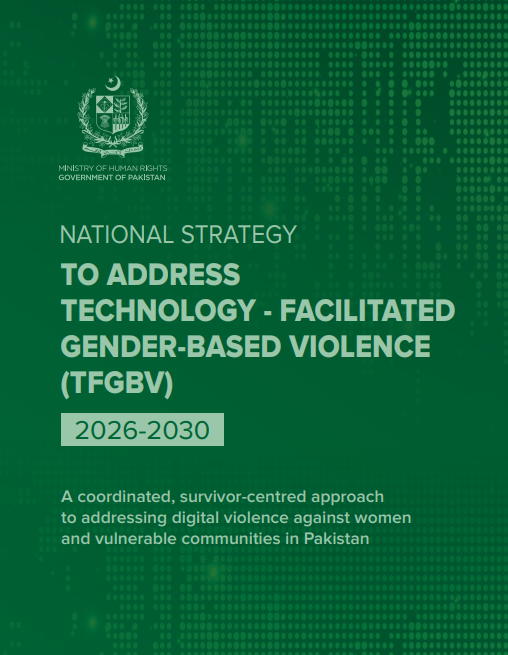
As Pakistan’s digital landscape expands, so does the need to ensure that online spaces are safe, inclusive, and rights-based. In 2024, eight million new female users came online, marking important progress in digital inclusion. Yet in the same year, 135,000 cybercrime complaints were reported, while only 826 cases proceeded to prosecution — just 0.6 percent. This gap between access and protection highlights the scale of the challenge and the need for a stronger institutional response.
Technology-facilitated gender-based violence (TFGBV) is increasingly shaping how women and girls experience digital spaces in Pakistan. From harassment and cyberstalking to image-based abuse, impersonation, and coordinated online intimidation, these harms can restrict expression, participation, and access to opportunity, while reinforcing existing inequalities.
To respond to this growing challenge, the Ministry of Human Rights, Government of Pakistan, has developed Pakistan’s first National Strategy to Counter Technology-Facilitated Gender-Based Violence. This strategy marks an important step toward a more coordinated, survivor-centred, and rights-based response. Developed through a consultative multi-stakeholder process, the strategy provides a national framework to strengthen prevention, protection, redress, and institutional coordination, while helping ensure that women and girls can participate in digital life with safety, dignity, and confidence.